Cybersecurity Threats and Scams Companies Must Watch in 2026

Cybersecurity Threats and Scams Companies Must Watch in 2026
Including the Rise of the “rnicrosoft” Scam and AI-Driven Attacks
Cyber threats are evolving faster than ever, and 2026 is shaping up to be one of the most challenging years yet for businesses of all sizes. With artificial intelligence, automation, and increasingly sophisticated social engineering techniques, cybercriminals are no longer relying on crude attacks. Instead, they are exploiting trust, human error, and visual deception.
From advanced phishing campaigns to look-alike brand scams such as the “rnicrosoft” scam, companies must rethink how they approach cybersecurity. This article explores the most critical cyber threats and scams businesses need to watch in 2026, and what organisations can do to protect themselves.
Why Cybersecurity in 2026 Is a Business Survival Issue
Cybersecurity is no longer just an IT concern. In 2026, a single breach can:
- Shut down operations for days or weeks
- Expose sensitive customer data
- Trigger regulatory fines and lawsuits
- Permanently damage brand trust
Small and mid-sized businesses are especially vulnerable. Attackers know they often lack dedicated security teams, making them prime targets for scams and ransomware.
The most dangerous trend? Attacks that look legitimate.
1. AI-Powered Phishing Attacks Are Harder to Detect
Traditional phishing emails were often easy to spot due to poor grammar or suspicious formatting. In 2026, that’s no longer the case.
What’s Changed:
- AI now generates perfectly written emails
- Messages are context-aware, referencing real projects, colleagues, or vendors
- Phishing emails adapt based on employee responses
Attackers scrape data from LinkedIn, company websites, and data breaches to craft believable messages that bypass both spam filters and human suspicion.
Business Impact:
- Credential theft
- Financial fraud
- Unauthorised access to internal systems
SEO keywords: AI phishing attacks, business email compromise, phishing scams 2026
2. The “rnicrosoft” Scam: A Simple Trick That Still Works
One of the most dangerous scams in 2026 is also one of the simplest: the “rnicrosoft” scam.
What Is the “rnicrosoft” Scam?
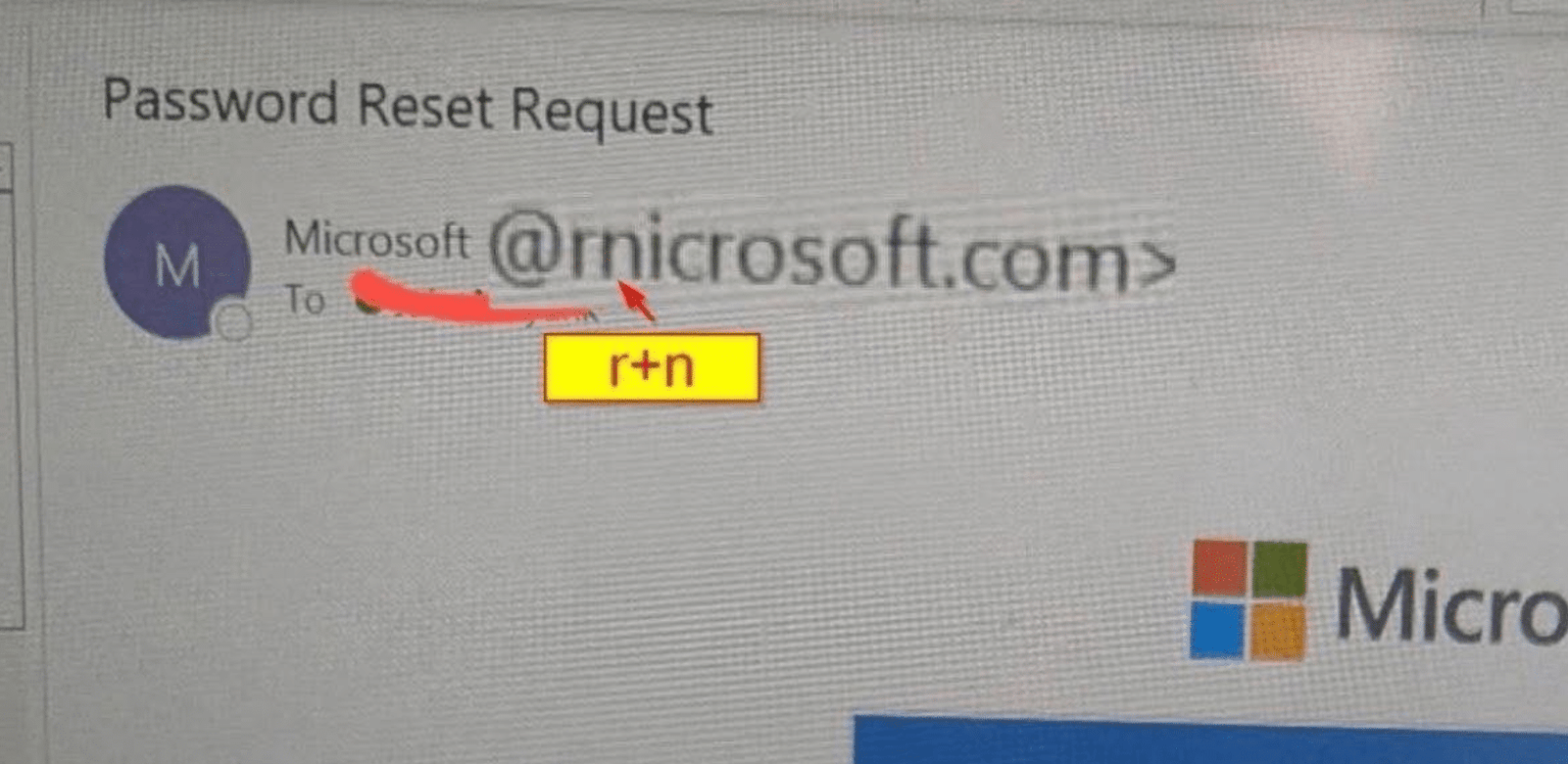
The scam exploits a visual trick where the letters “r” and “n” appear together as “m” in certain fonts. As a result:
- rnicrosoft.com looks almost identical to microsoft.com
- Logos, emails, and fake websites appear legitimate at a glance
Attackers use this trick to impersonate Microsoft in emails, login pages, invoices, and software update alerts.
You can see this particular scam in the photo above.
How the Scam Works:
- Employees receive an email claiming to be from “Microsoft”
- The sender address or link subtly uses rnicrosoft instead of microsoft
- Users are asked to reset passwords, download updates, or verify accounts
- Credentials are stolen or malware is installed
Why It’s So Effective in 2026:
- Microsoft is trusted by almost every business
- Fonts and mobile screens make detection harder
- Employees are overloaded and click quickly
Real-World Consequences:
- Compromised Microsoft 365 accounts
- Access to emails, Teams, SharePoint, and OneDrive
- Internal phishing sent from legitimate employee accounts
3. Look-Alike Domain and Brand Impersonation Attacks
The “rnicrosoft” scam is part of a much larger trend: look-alike domain attacks.
In 2026, attackers register domains that differ by:
- One letter (rn vs m)
- Extra characters
- Slight spelling variations
Examples:
- paypaI.com (capital “i” instead of “l”)
- amaz0n.com (zero instead of “o”)
- micros0ft-secure.com
Why Companies Should Care:
- Employees trust familiar brands
- Vendors and partners can be impersonated
- Finance teams are common targets
This is especially dangerous in invoice fraud and payment redirection scams.
4. Deepfake Voice and Video Scams Target Executives
Deepfake technology has advanced dramatically, and in 2026 it is being actively used in cybercrime.
Common Scenarios:
- Fake CEO voice calls requesting urgent payments
- Video messages from “executives” authorising access
- AI-generated voicemail instructions
These attacks prey on urgency and authority, making employees hesitate to question them.
Departments Most at Risk:
- Finance
- HR
- Legal
- Executive assistants
5. Ransomware Is Faster, Smarter, and More Targeted
Ransomware attacks in 2026 are no longer random. Attackers:
- Research companies before attacking
- Steal data before encrypting systems
- Threaten public leaks if ransom isn’t paid
Many attacks now exploit:
- Unpatched software
- Stolen credentials from phishing scams
- Remote access tools
Small companies are often targeted because attackers assume weaker defenses.
6. Supply Chain and Vendor Attacks Are Increasing
Instead of attacking a company directly, cybercriminals increasingly target:
- IT service providers
- Software vendors
- Cloud platforms
Once compromised, attackers gain access to multiple businesses at once.
This makes vendor risk management a top priority for 2026.
7. Employees Remain the Weakest Link and the First Line of Defense
Despite advanced tools, human error remains the #1 cause of breaches.
Common mistakes include:
- Clicking malicious links
- Reusing passwords
- Ignoring security warnings
- Trusting familiar brand names like Microsoft
The “rnicrosoft” scam works precisely because it exploits this trust.
How Companies Can Protect Themselves in 2026
1. Train Employees on Visual Scams
Security awareness training must now include:
- Look-alike domains
- Font-based scams (like rn vs m)
- Mobile email risks
2. Enforce Multi-Factor Authentication (MFA)
Even if credentials are stolen, MFA can stop attackers.
Focus on:
- Microsoft 365
- Email systems
- VPNs
- Admin accounts
3. Monitor and Block Look-Alike Domains
Companies should:
- Register similar domains to their own
- Monitor for impersonation domains
- Block known malicious domains at the network level
4. Verify Financial Requests Out-of-Band
Any payment or sensitive request should be verified via:
- A phone call
- A known internal channel
- A second approver
Never rely solely on email or voice messages.
5. Keep Systems Updated
Many attacks succeed simply because patches were delayed.
Regular updates reduce exposure to:
- Ransomware
- Zero-day exploits
- Credential theft
Final Thoughts: Cyber Awareness Is the New Firewall
In 2026, cybersecurity is no longer just about firewalls and antivirus software. It’s about awareness, verification, and scepticism.
Scams like the ‘rnicrosoft’ scam prove that attackers don’t always need advanced malware sometimes all they need is a clever visual trick and a moment of inattention.
Companies that invest in employee education, strong authentication, and proactive monitoring will be far better positioned to survive the evolving cyber threat landscape.